Weixiang Fang
Postdoctoral Fellow, Department of Biomedical Engineering, Johns Hopkins University
855 N. Wolfe St., Rangos 570, Baltimore, MD 21205 · wfang9 [at] jh [dot] edu

I am on the academic job market in 2026–27, applying for faculty positions in computational biology, biomedical engineering and biostatistics. My CV is here.
I am a postdoctoral fellow in the Kalhor Lab at Johns Hopkins, where I work closely with wet lab scientists. I received my PhD in Biostatistics from the Johns Hopkins Bloomberg School of Public Health, working with Dr. Hongkai Ji.
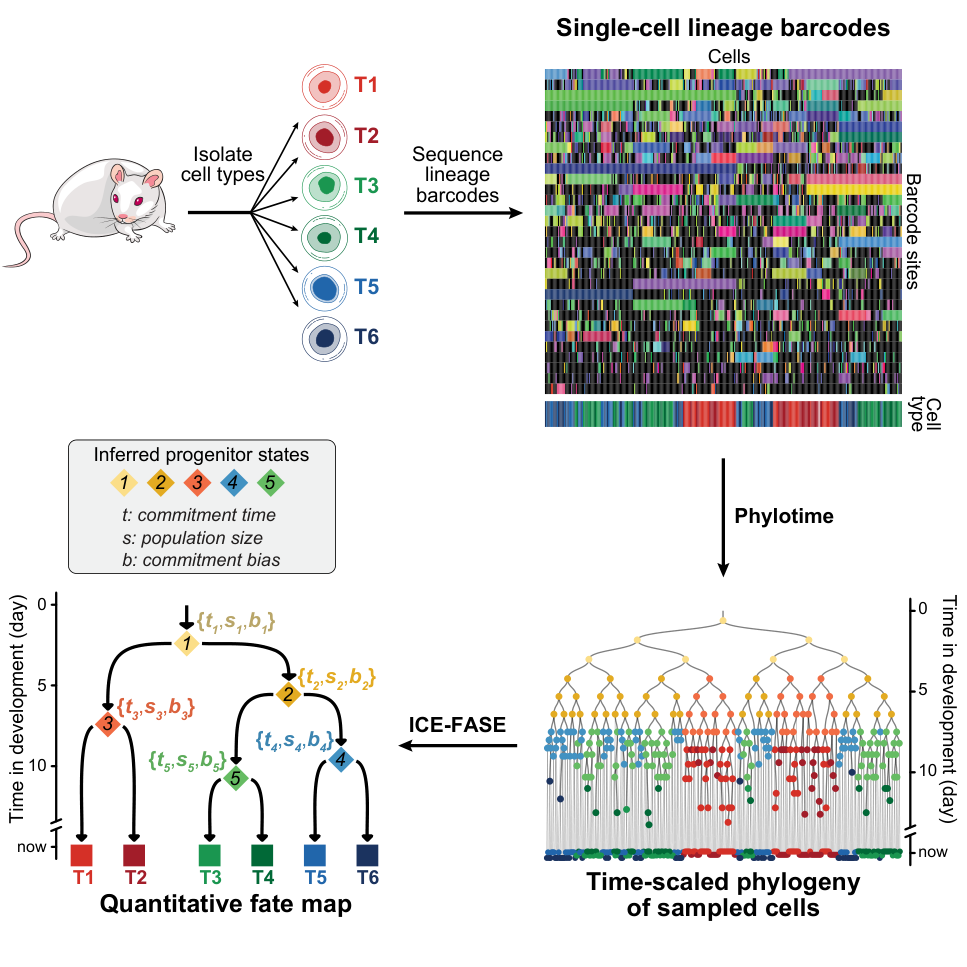
I work with genomic lineage recorders, which can now barcode millions of cells and trace the division tree of a whole embryo. Learning biology from that tree is much harder. I developed Quantitative Fate Mapping (Cell, 2022) to do it, recovering when progenitors commit and how many cells go to each fate, decisions that cannot be watched otherwise.
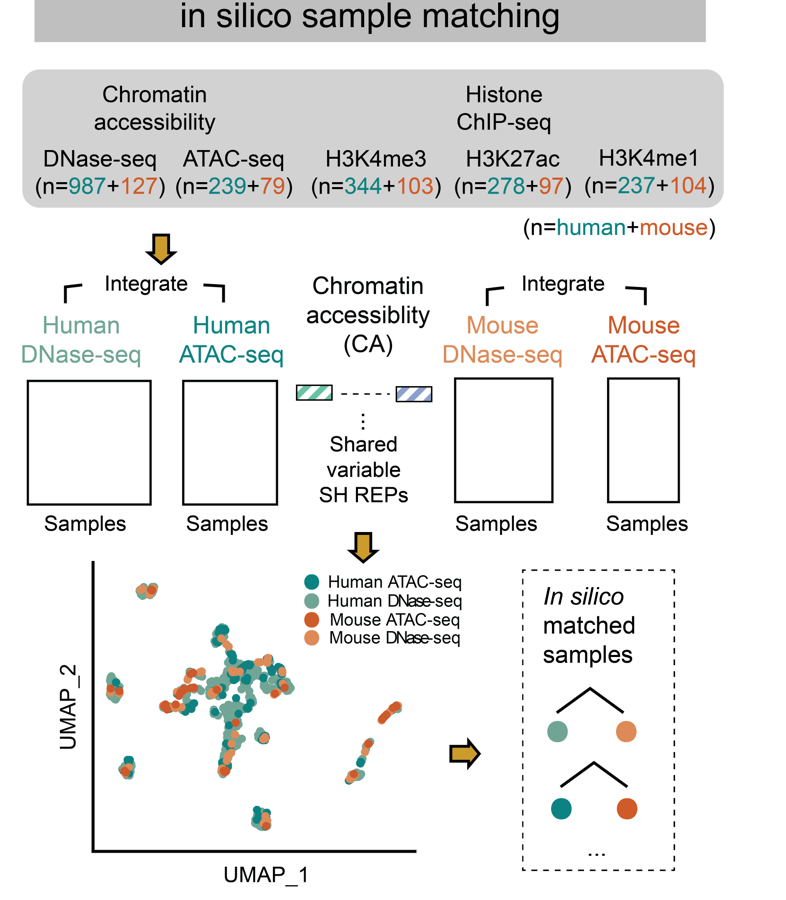
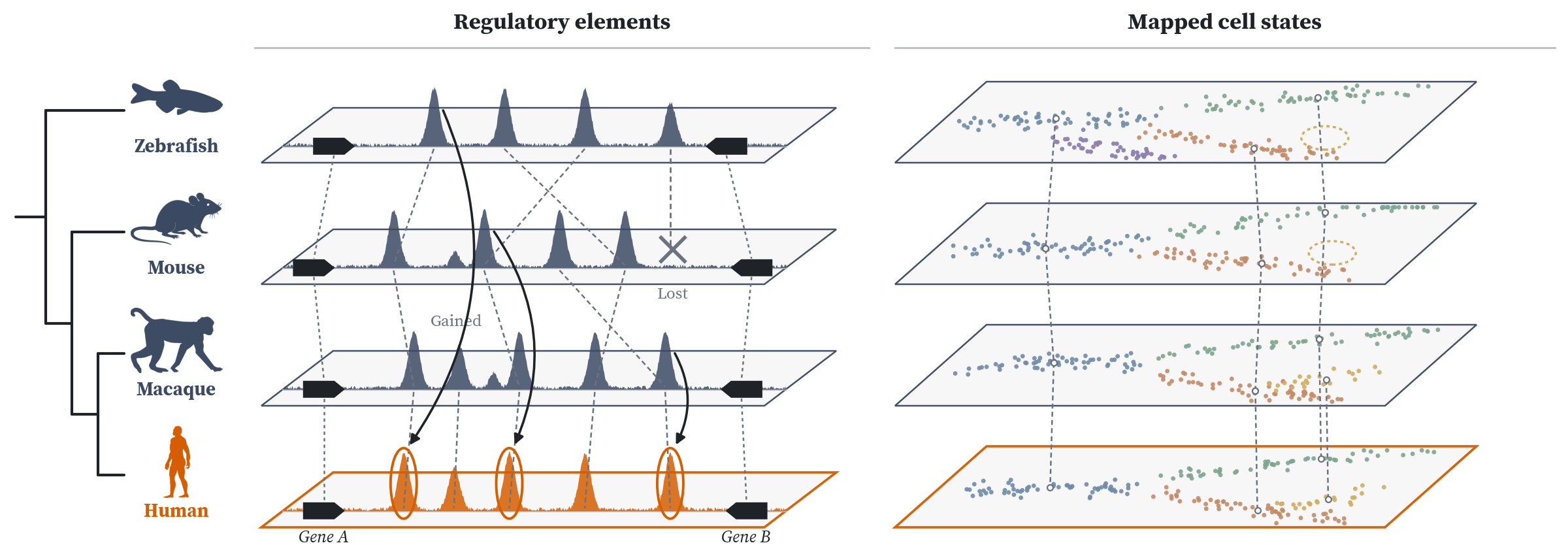
I also built FUNCODE for the ENCODE Consortium, because regulatory DNA evolves fast, and an active mouse enhancer often aligns to a human sequence with no function at all. FUNCODE scores whether an element’s functional signal is conserved between human and mouse, which helps prioritize mouse findings for translation to human.
Research Areas
Reading the history of cells from their DNA
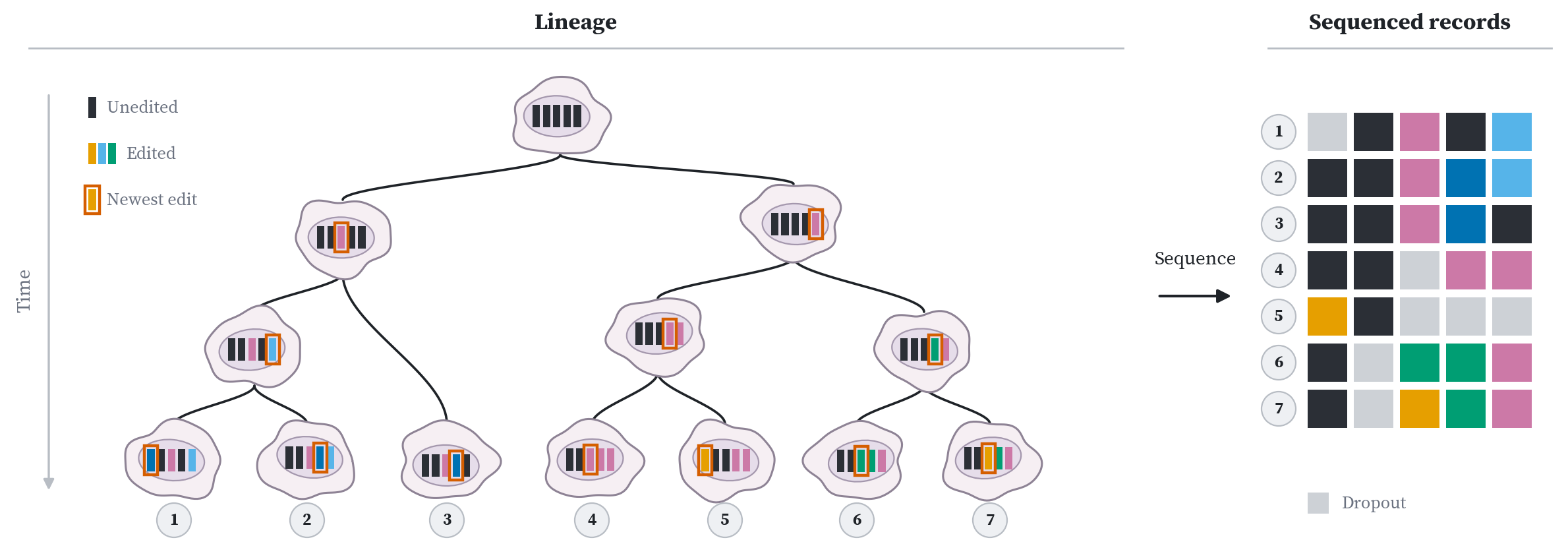
Engineered recorders now write each cell's history into its own DNA as it divides. I build the models that read those records back into the tree of divisions that built a tissue, at the scale of whole embryos.
What decides a cell's fate
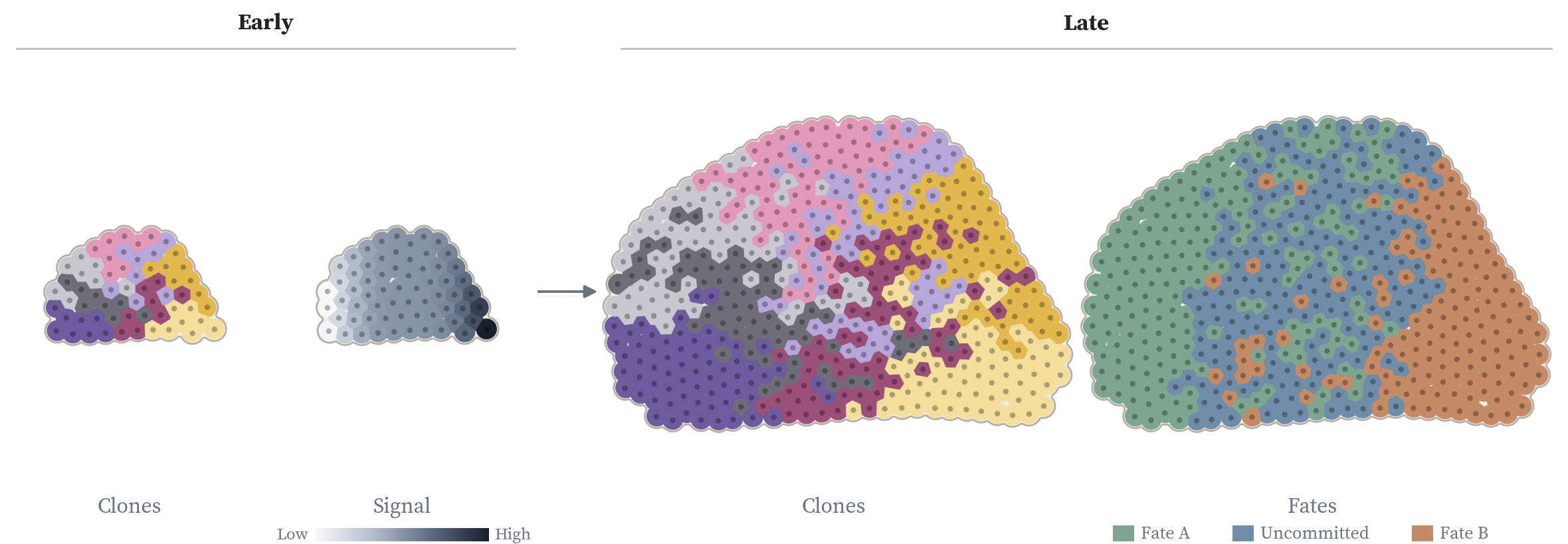
A cell's future depends both on its own state and on the signals around it. I build models of development that ask how much of a cell's fate is driven by what signals, and how much can still be changed.
From model organisms to human
Much of what we know about how fate is controlled was learned in animals. I develop methods that carry that knowledge into human, and show where it does not carry.
selected publications
- In prep.A branching process model of cell lineage links positional signaling to the canalization of clonal fate2026Manuscript in preparation